
Summary
Final Fantasy XIV: Endwalker is often discussed through the lens of suffering: whether Venat was right, whether the Ancients were wrong, and whether the sundering can be justified. But to me, the heart of Endwalker is not simply the existence of suffering. It is about life itself: how one chooses to live when suffering, loss, and despair are unavoidable.
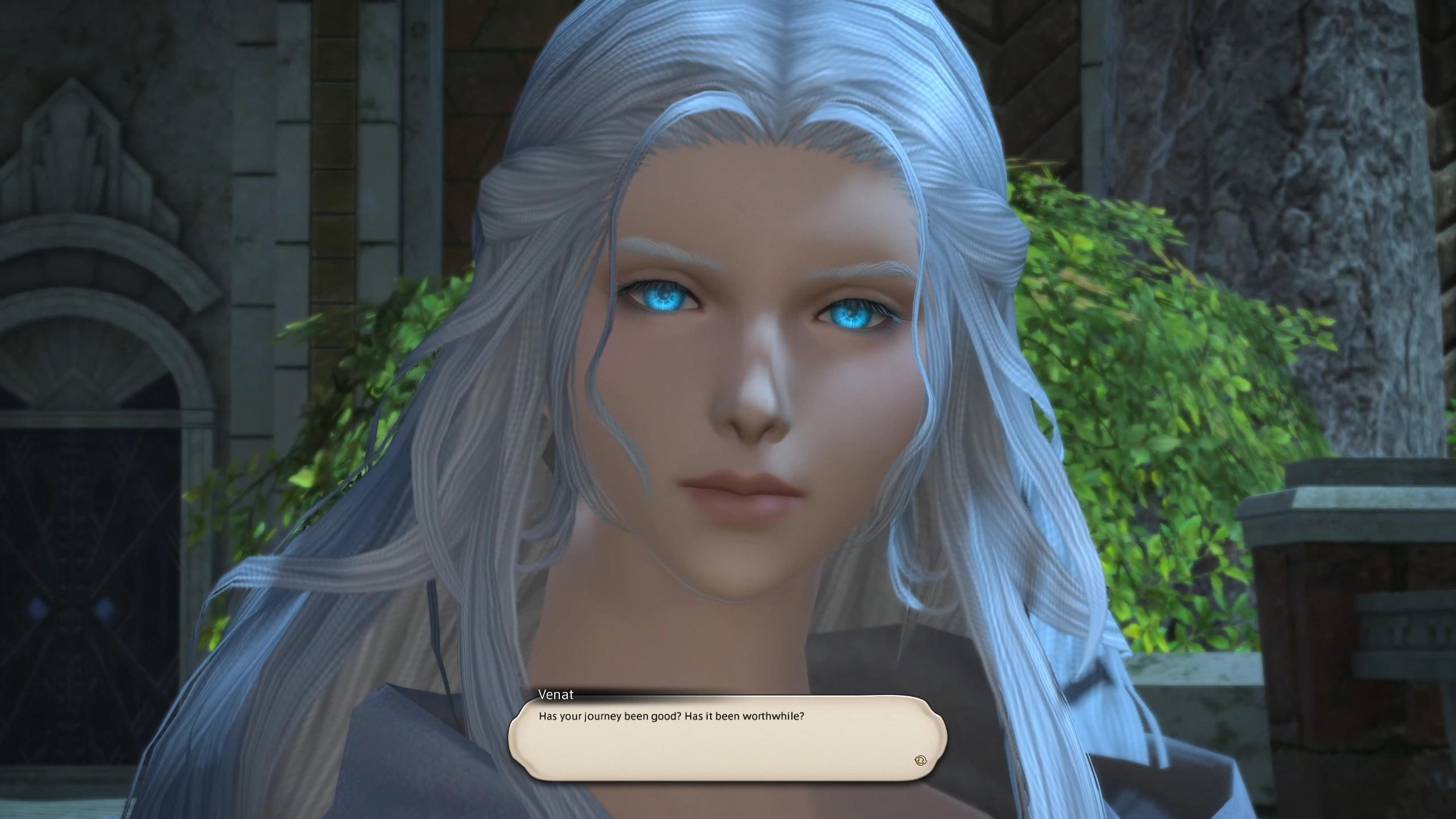
Venat’s question — “Has the journey been good? Has it been worthwhile?” — is not asking us to deny the pain of the road. It asks whether life, with all its grief and impermanence, is still worth living. Endwalker answers through its central refrain: forge ahead. Not because the darkness disappears, but because there is always another step, another dawn, and another chance to make the world a little kinder.
There is a question near the heart of Final Fantasy XIV: Endwalker that has never really left me.
Venat asks: “Has the journey been good? Has it been worthwhile?”
It is a deceptively gentle question. But within Endwalker, it carries the weight of everything: the Final Days, the Ancients, the sundering of the star, the sacrifices made across history, and the long road walked by the Warrior of Light. It is not a question that resolves the story cleanly. It does not erase suffering, excuse every choice, or turn tragedy into something simple.
Instead, it asks something more difficult.
Was it worth it to live?
That, to me, is where many conversations around Endwalker risk missing the forest for the trees. Discussions often focus on the existence of suffering itself. Was Venat right? Were the Ancients wrong? Was the sundering justified? Could there have been another way? These are fair questions, and the story invites them. Endwalker is full of complicated moralities, especially around the Ancients and their attempts to answer the horror of the Final Days.
But I do not think the expansion is only asking whether suffering exists, or even whether suffering can be justified. Its deeper concern is life: how one lives it, why one continues, and what it means to keep walking when the world offers no promise of fairness or permanence.
Has the Journey Been Good?
To say yes is not to say the journey has been painless.
It is not to say every wound healed, every sacrifice was fair, or every choice was right. It is to say there was beauty there. That there was love. That there were moments of grace bright enough to matter. That even in a broken world, especially in a broken world, it was worth reaching for one another.
Endwalker understands that hope is not the absence of despair. Hope is what remains after despair has made its case, and one still chooses to move.
So we forge ahead.
Not because the path is easy. Not because the future is promised. Not because the darkness is gone forever.
We forge ahead because somewhere beyond the pall, there is another dawn. Because the world continues to turn. Because life goes on through its highs and lows, its griefs and miracles, its endings and beginnings.
And because with each step, however small, we may yet make the road a little kinder.
Has the journey been good?
For all its sorrow and uncertainty — yes.
It has been worthwhile.